
Five years after sequential CAR-T therapy, the pediatric patient has achieved clinical cure—a ray of hope after nine years of waiting.
After undergoing sequential CAR-T therapy, the young patient Xiaoxiao achieved clinical remission and was officially declared free of leukemia—the outcome she and her family had awaited for nine years.
In the immediate aftermath of the CD19 CAR-T cell infusion, no one could predict whether this frail, slight girl would successfully weather the ordeal and make a full recovery.
Diagnosis, chemotherapy, discontinuation of treatment, and subsequent disease recurrence.
Xiao Xiao’s complexion deteriorated and she began crying incessantly for no apparent reason, prompting a visit to a local hospital. Bone marrow cytology and immunophenotyping confirmed a diagnosis of acute B-lymphoblastic leukemia (B-ALL); she was just over two years old at the time.
For the next three-plus years, chemotherapy, bone marrow aspirations, and intrathecal injections dominated much of her childhood. Fortunately, repeated bone marrow assessments consistently showed negative results. She completed her chemotherapy regimen, and the family believed the hardest part was over. However, a follow-up bone marrow examination shattered that peace: 25.6% of the cells in her bone marrow were identified as primitive, immature lymphocytes, indicating a full-blown relapse of the leukemia.
To this day, Xiao Xiao’s father vividly remembers the moment he received that follow-up report. The sudden news made him feel, for a time, as though the perseverance of the past few years had been in vain—yet he had no time to give in to despair. He gathered all her medical records and began actively seeking avenues for continued treatment.
Traveling to Beijing amidst the pandemic to seek treatment from Director Pan Jing’s team.
The journey to seek medical treatment across provinces was fraught with obstacles. During a relapse, every day of delay risked a continued increase in tumor burden. Without hesitation, Xiaoxiao’s father took the necessary protective measures and rushed with her from their hometown to Beijing.
At the Department of Hematology-Oncology and Immunotherapy at Beijing Gaobo Hospital, Director Pan Jing’s team meticulously reviewed Xiaoxiao’s entire medical history—spanning her initial diagnosis, the period off medication, and the subsequent relapse—and conducted a comprehensive assessment based on her current physical condition. After thorough consultation with the family, the team determined that Xiaoxiao met the eligibility criteria for CAR-T cell therapy.
“The child’s baseline physical condition is reasonably good; following chemotherapy after the relapse, her tumor burden has decreased, making her a suitable candidate for sequential therapy.” Director Pan’s assessment brought the first sense of relief to Xiaoxiao’s father, easing the anxiety that had been weighing heavily on him. The medical team subsequently devised a treatment plan combining tumor-burden reduction with sequential CD19/CD22 CAR-T cell therapy.
CAR-T is not a single procedure, but a complete, continuous treatment cycle.
The public often mistakenly believes that CAR-T cell therapy consists solely of the cell infusion itself; however, the infusion is merely one component of the entire treatment process.
The comprehensive process begins with a preliminary assessment, during which doctors evaluate the patient’s physical condition, disease progression, and treatment history to determine suitability for CAR-T therapy. This is followed by the formulation and dynamic adjustment of a personalized treatment plan, encompassing key steps such as cell manufacturing and infusion. Post-infusion, patients must manage various risks—including fever, inflammatory responses, infections, and immune reconstitution—while undergoing long-term follow-up to continuously monitor therapeutic efficacy and physical recovery. These stages are interconnected and interdependent; they cannot be viewed in isolation.
For the patient, CAR-T represents a continuous, comprehensive treatment journey rather than a single surgical procedure. The ultimate outcome is rarely determined by the day of infusion alone but is instead shaped by the management of the entire clinical process.
Xiaoxiao first underwent chemotherapy to reduce tumor burden and received FC pre-conditioning, successfully completing the CD19 CAR-T cell infusion. Follow-up assessments showed no abnormal lymphocytes regarding minimal residual disease (MRD) in the bone marrow, and morphological results for both bone marrow and peripheral blood were negative. Subsequently, in accordance with the established plan, she completed the sequential infusion of autologous human-origin CD22 CAR-T cells.
Following the cell infusions, Xiaoxiao experienced fever and a period of bone marrow suppression, and she also contracted COVID-19 during the later stages of the sequential treatment. Amidst the harsh winter of the country’s first major wave of infections, she successfully weathered every challenge. Throughout every fluctuation in her condition, her father remained by her side in the hospital room, keeping watch day and night.
The two cell infusions constitute this comprehensive sequential regimen—a treatment strategy continuously validated in clinical practice by Director Pan Jing’s team. By employing a sequential CD19 CAR-T and CD22 CAR-T approach to treat pediatric relapsed/refractory B-cell acute lymphoblastic leukemia (B-ALL), this regimen significantly reduces both the overall relapse rate and the rate of antigen-negative relapse compared to single-target CAR-T therapies. The interval between the two CAR-T infusions was precisely calculated to ensure the timely administration of CD22 CAR-T while maintaining safety, thereby minimizing the likelihood of the tumor developing immune escape via target antigen loss.
End-to-end medical support and the father who kept a long, steadfast watch.
As cell therapy becomes increasingly widespread, a distinct pattern has emerged: even when the same technology is employed, treatment outcomes and patient experiences vary from person to person. These differences largely stem from the implementation phase—specifically, the adequacy of assessments, the stability of the treatment pace, the timeliness of managing adverse reactions, and the consistency of long-term follow-up care.
While these elements may seem straightforward in isolation, in real-world clinical practice, they often overlap and influence one another. What patients choose is not merely a medical technology, but a comprehensive set of capabilities ensuring a smooth treatment process: a robust risk-stratification system, a stable and fully implemented end-to-end treatment pathway, and extensive clinical experience in managing complex complications.
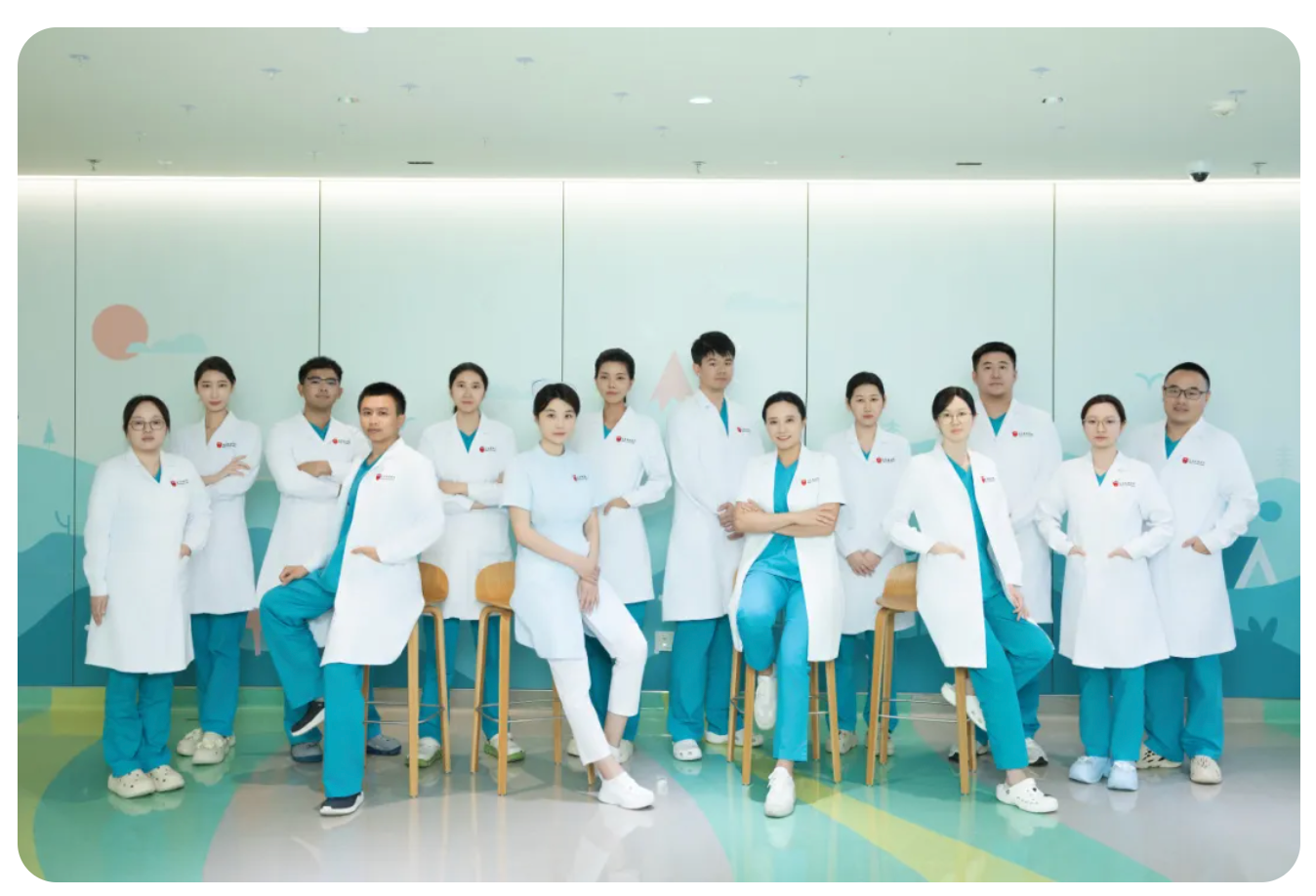
Director Pan Jing leads a team that performs over 200 CAR-T therapy procedures annually for pediatric patients with relapsed or refractory lymphoblastic leukemia, achieving outcomes that rank among the best internationally. In their clinical work, the team focuses not only on technological innovation but also on doctor-patient communication and the cultivation of trust. Director Pan frequently interacts with the families of young patients in the ward, picking up on subtle yet critical details to dynamically refine treatment plans.
Over the course of five years, a father’s devotion has transcended measurement by mere medical metrics. From carrying his two-year-old daughter back and forth to the hospital, to seeking help far and wide with a thick stack of medical records after a relapse, and finally traveling to Beijing for treatment—through bone marrow aspirations, cell infusions, and the constant monitoring of every fever—he has never once been absent. Along this arduous medical journey, the father, once a young man, has seen his hair turn completely white.
A five-year milestone: reaching the peak of healing.
It has been five years since Xiaoxiao completed her sequential CAR-T therapy. By clinical standards, she is officially free of leukemia and considered clinically cured, no longer requiring routine follow-ups. Her name has been inscribed on the “Peak of CAR-T Cure” roster at the Department of Hematology-Oncology and Immunotherapy at Beijing Gaobo Hospital, signifying sustained complete remission.
Now 11 years old, Xiaoxiao has gradually caught up with her peers in height and weight; she attends school normally and plays with friends on weekends, and her family has regained their smiles.
Xiaoxiao’s father occasionally looks back at old photos from her hospital days—pictures showing a little girl in a face mask and a younger version of himself with dark hair. Contrasting this with the present—where his daughter runs and plays in the living room while his own hair has turned completely white—he feels no regret.
“Let it turn white; it was worth it.”
As Director Pan Jing has noted, for children with blood disorders, the illness is merely a difficult trial in life; once they overcome it, they can still enjoy a healthy childhood. For Xiaoxiao’s family, this milestone means far more than just the label “clinically cured”—it represents the family’s successful journey through a five-year marathon to reclaim their ordinary, happy life.