
Vitiligo is an acquired, chronic, and recurrent skin disorder characterized by patchy depigmentation. It is caused by the destruction of epidermal melanocytes.
Vitiligo can be disfiguring, often leading to varying degrees of psychosocial distress and a decline in patients’ quality of life. Currently, the etiology of vitiligo has not been fully elucidated, and effective treatment options remain limited. Therefore, there is an urgent need to find an effective therapeutic approach for vitiligo.
Research on the pathogenesis of vitiligo indicates that immune mechanisms, along with other pathogenic factors, play a crucial role in the onset and progression of the disease; this significance has been confirmed by numerous studies.

1. The Clinical Challenge: Up to 80% of Patients Lack Effective Treatment
Clinical data reveals that 80% of vitiligo patients do not receive effective treatment, and the ineffective rate of various therapies for vitiligo patients is as high as 50%.
While vitiligo does not affect the body’s physical health or physiological functions, its visual impact places a tremendous emotional and mental burden on patients.
2. The Breakthrough: Unique Advantages of Mesenchymal Stem Cells (MSCs)
Mesenchymal Stem Cells (MSCs) have garnered significant attention due to their unique biological properties, including:
Immunomodulatory properties
Promotion of tissue regeneration
Low post-transplantation rejection rates
Latest Clinical Evidence:
A recent study in India involving cell transplantation therapy for vitiligo patients showed that transplantation efficiency can be predicted by the infiltration of CD8+ T cell activity around the lesions. Meanwhile, the results demonstrated that these cells could significantly inhibit the skin-homing activity of CD8+ T lymphocytes, suggesting the great potential of cell therapy in improving the transplantation efficiency and efficacy for vitiligo.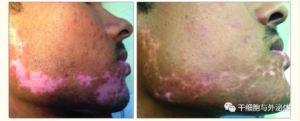
3. Restoring Skin Tone: Clinical Practice of Stem Cell Therapy
Clinical researchers at Noble Clinic in Bangalore, India, pointed out that with recent advances in biotechnology and the emergence of new technologies such as cell transplantation surgery and stem cell therapy, it is now possible for the majority of patients to restore their skin tone.
Researchers explained that stem cells are injected intravenously into the body, which helps stabilize the spread of vitiligo and promotes pigmentation over time. This is because these cells possess superior immunosuppressive and immunomodulatory properties.
Most vitiligo patients suffer from autoimmune diseases, in which the patient’s immune system malfunctions and produces autoantibodies—proteins that destroy color-producing cells in the skin called melanocytes. Once these cells are killed, pigmentation does not occur, and the skin turns white. The intervention of stem cell therapy precisely blocks this destructive process from its immunological root.
4. Policy Empowerment: Accelerating Innovation in the “Lecheng Medical Pilot Zone”
As a “special zone” for medical innovation in China, the Boao Lecheng International Medical Tourism Pilot Zone enjoys core policy advantages such as “special licensed medical treatment, special research, and special operation.” Here, cutting-edge technologies like mesenchymal stem cell therapy can leverage the pilot policies granted by the state to accelerate clinical translation and application. This allows domestic patients to access internationally advanced cell therapy technologies without traveling abroad, bringing true “new hope” to the clinical treatment of vitiligo.