
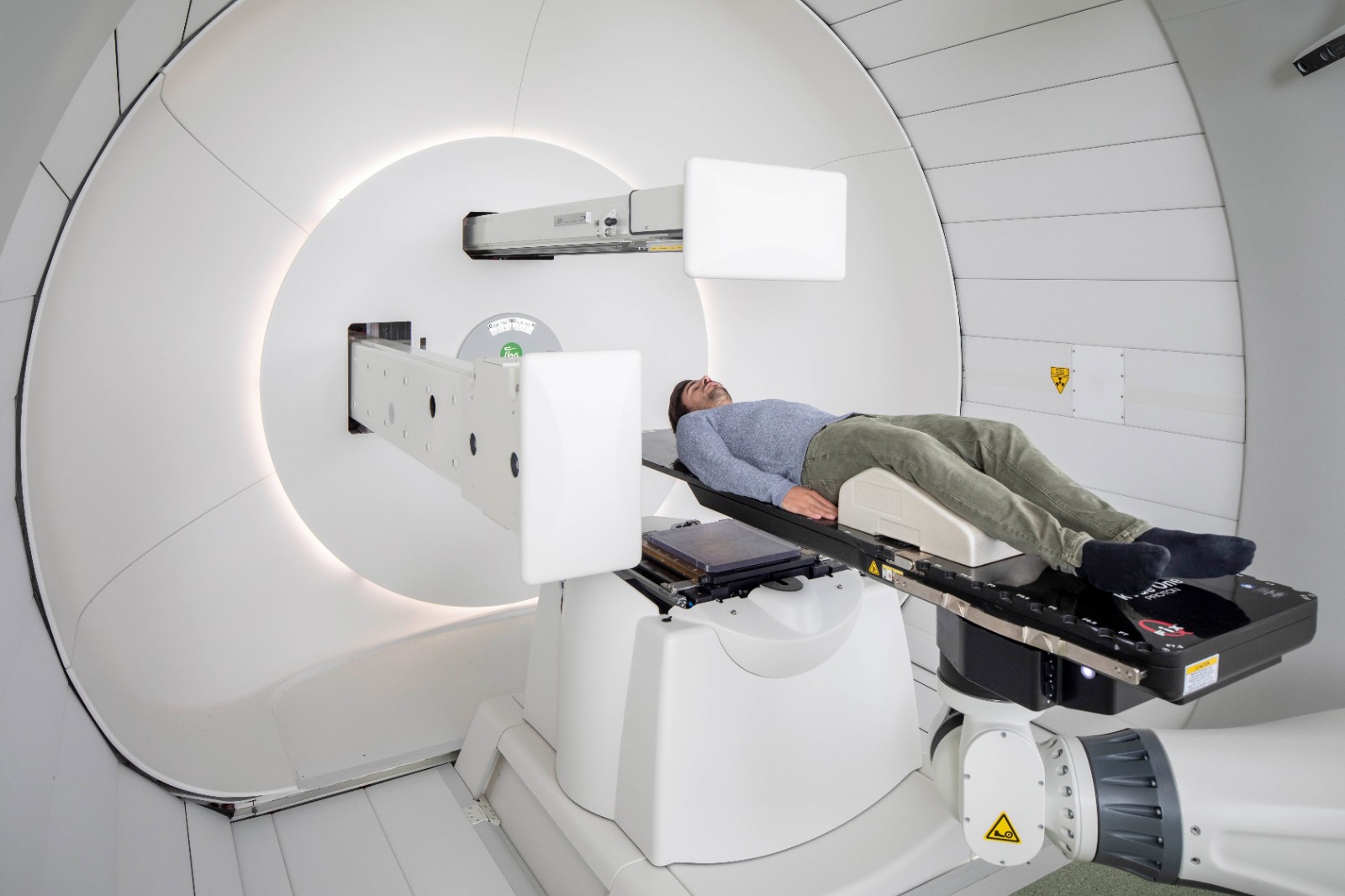
Complete resolution of liver metastases from esophageal cancer following 30 sessions of proton therapy.
Proton Therapy for Liver Cancer: 5-Year Local Progression-Free Rate Exceeds 85%
Among men under the age of 60, liver cancer ranks first in terms of cancer incidence and mortality.
Deaths among cancer patients are largely caused by local recurrence and distant metastasis. The liver is the body’s largest solid organ and has a rich blood supply; consequently, primary liver tumors are prone to intrahepatic or extrahepatic metastasis, and the liver is also a common site for metastasis from many other malignancies.
Metastatic liver cancer—also known as secondary liver cancer—refers to tumors formed when malignancies from other parts of the body spread to the liver. During the course of malignant disease, 25% to 50% of primary tumors metastasize to the liver. Statistically, liver metastasis is the second most common form of spread, ranking just behind lymphatic metastasis. Metastases originating from the digestive tract and pelvic region are particularly common, involving sites such as the stomach, small intestine, colon, rectum, gallbladder, pancreas, prostate, uterus, and ovaries; however, metastases from the thyroid, breast, nasopharynx, lungs, and kidneys are also frequently observed.
Proton Therapy for Liver Cancer: 5-Year Local Progression-Free Rate Exceeds 85%
Surgery is the preferred treatment for most early-stage liver cancers, yet the majority of patients are ineligible for surgery at the time of diagnosis. Radiation therapy serves as a crucial treatment option for unresectable liver cancer. Liver cancer cells are relatively sensitive to radiation; however, the low radiation tolerance of normal liver tissue limits the use of X-ray radiotherapy, particularly in patients with multiple liver tumors. Proton therapy allows for the delivery of high radiation doses to the tumor while significantly reducing the dose received by surrounding normal tissues.
Compared to X-ray therapy, proton therapy offers superior protection for normal liver tissue. Studies indicate that proton therapy yields favorable outcomes for primary hepatocellular carcinoma, achieving a 5-year local progression-free rate of over 85%. Additionally, research suggests that proton therapy is associated with a reduction in adverse events. In a Phase II trial, acute toxicity during proton therapy was minimal, consisting only of Grade 1 erythema and mild fatigue; no acute toxicities interfered with the proton therapy.
A 53-year-old male diagnosed with esophageal cancer and three liver metastases
A case of proton therapy for liver metastases from esophageal cancer was previously reported in the journal International Surgery.
A 53-year-old male presented with complaints of heartburn and a choking sensation. Esophagogastroduodenoscopy revealed cancer at the esophagogastric junction and in the upper thoracic esophagus. Additionally, computed tomography (CT) scans showed multiple liver metastases and mediastinal lymph node metastasis. Specifically, there were three liver metastases (measuring 45.5 mm in segment S2, 67.5 mm in S4, and 48.3 mm in S6) and one mediastinal lymph node metastasis. Routine laboratory test results, including tumor marker levels, were normal. Positron emission tomography (PET) showed fluorodeoxyglucose (FDG) accumulation in the liver (segments S2, S4, and S6), the primary tumor sites (esophagogastric junction and upper thoracic esophagus), and a left supraclavicular lymph node. Based on these findings, the patient was diagnosed with Stage IV disease (T3N1M1 [liver] for the lower thoracic esophageal cancer and T3 for the upper thoracic esophageal cancer) and a chemotherapy regimen was planned.
Over 30 proton therapy sessions: Complete elimination of all tumors
The efficacy of chemotherapy was assessed using the World Health Organization (WHO) criteria for response in solid tumors. However, disease progression was observed after four cycles of chemotherapy. Consequently, the treatment plan was modified to combine proton therapy with chemotherapy. Proton beams were delivered via two oblique ports. Initially, the primary tumors, the left supraclavicular lymph node, and the liver metastasis in segment S6 were treated with proton therapy—receiving 31 fractions (total dose: 68.2 Gy) and 30 fractions (total dose: 66 Gy), respectively. Subsequently, chemotherapy was administered. Finally, the liver metastases in segments S2 and S4 were treated with proton therapy, receiving 30 fractions for a total dose of 66 Gy. Approximately two months after the completion of proton therapy combined with chemotherapy, PET scans showed the disappearance of FDG uptake in all liver metastasis sites, the primary tumor, and the mediastinal lymph nodes.
CT and PET imaging confirmed the complete resolution of all target lesions—specifically those in liver segments S2, S4, and S6, as well as the upper mediastinal lymph nodes. Esophagogastroduodenoscopy revealed the resolution of non-target lesions (the primary tumor located at the upper thoracic esophagus and the gastroesophageal junction), indicating a complete remission of the esophageal cancer. No treatment-related acute or late toxicities were observed.
In summary, proton therapy is a highly advanced medical technology that yields excellent results in treating both primary and metastatic liver cancer, offering new hope to cancer patients today.