
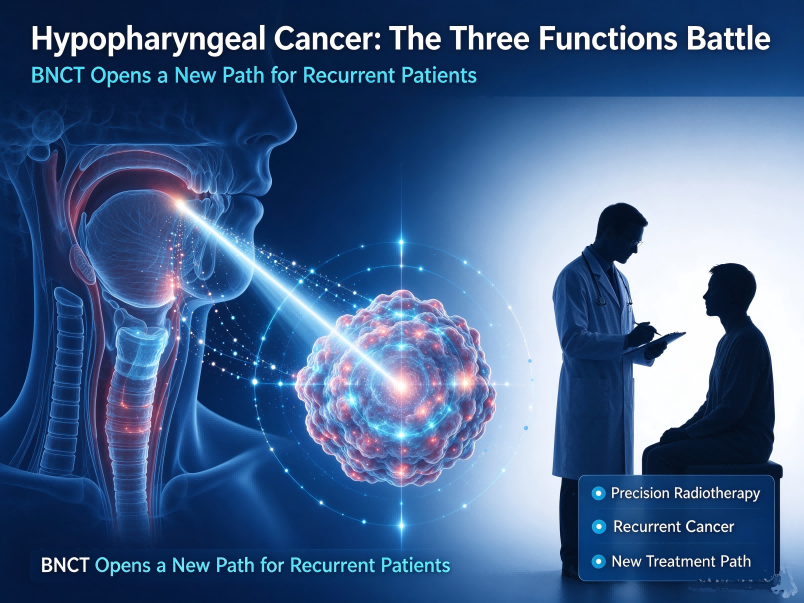
The throat (pharyngolarynx) serves as a critical junction for three vital functions: breathing, swallowing, and vocalization. Anatomically, it is a confined space situated in close proximity to the carotid arteries, the thyroid gland, and the entrance to the esophagus. Hypopharyngeal cancer—most commonly squamous cell carcinoma—is often insidious; symptoms frequently appear late, meaning that by the time of diagnosis, the tumor has often already invaded surrounding structures. Among head and neck cancers, it carries a poor prognosis and a high risk of functional impairment. For a long time, the central dilemma in treating hypopharyngeal cancer has remained acute: how to achieve a radical cure while preserving the essential, yet seemingly mundane, functions of speaking, eating, and breathing?
Within standardized clinical practice, early-stage hypopharyngeal cancer can be effectively controlled through surgery or radical radiotherapy, with a reasonable chance of preserving function. However, once the disease reaches a locally advanced stage—or recurs following initial surgery or radiotherapy—treatment options become severely constrained.
Balancing radical tumor eradication with functional preservation is exceptionally difficult. Total laryngectomy or total pharyngolaryngectomy can ensure clear surgical margins, but at the cost of the permanent loss of natural speech, leaving the patient dependent on a permanent neck stoma for breathing. Furthermore, there is virtually no room for re-irradiation; the mucosal lining and cartilage of the throat have a limited tolerance for radiation, and a second course of conventional radiotherapy carries a significantly higher risk of complications, such as cartilage necrosis or severe stricture. Meanwhile, tumor progression poses a direct threat to the body’s vital pathways: airway obstruction leads to respiratory distress, while impaired swallowing prevents food intake. The condition can deteriorate rapidly, leading to a swift collapse of the patient’s overall physical state.
Boron Neutron Capture Therapy (BNCT) offers a novel approach to targeting tumors located in these “functionally critical” zones, thanks to its unique binary, targeted mechanism. In China, BNCT is currently approved for the treatment of unresectable, locally advanced, or recurrent head and neck malignancies. Unlike conventional radiotherapy, BNCT enables the precise, localized destruction of tumor cells. A boron-containing agent is administered intravenously, accumulating specifically within the tumor cells while leaving healthy tissue largely unaffected. Subsequently, the area is exposed to a neutron beam, which triggers a targeted nuclear reaction exclusively within the cancer cells. The range of the destructive particles produced by BNCT is limited to approximately the diameter of a single cell, with energy release confined entirely within the lesion. This allows for the protection of critical structures—such as laryngeal cartilage, the recurrent laryngeal nerve, the esophageal mucosa, and adjacent major blood vessels. In real-world clinical practice in China, patients with refractory laryngeal tumors—who had experienced recurrences despite multiple prior surgeries, radiation therapy, or chemotherapy—have shown significant, visible shrinkage of their lesions just 40 hours after BNCT, accompanied by a marked reduction in the sensation of a foreign object in the throat. Follow-up examinations two weeks later revealed further regression of the lesions and improved patency of the laryngeal cavity (based on individual case records; outcomes may vary).
BNCT is subject to strict clinical criteria. For early-stage hypopharyngeal cancer that can be completely resected or treated with curative-intent radiation, standard treatment protocols remain the preferred choice. Patients with unresectable tumors or late-stage recurrences should consult with specialists at an oncology hospital as soon as possible to determine their eligibility for BNCT. Candidates for BNCT must undergo a comprehensive multidisciplinary evaluation—incorporating pathological classification, imaging-based staging, and a review of their prior treatment history—before a tailored treatment plan can be established.
Advancements in cancer treatment are intended to fill gaps in conventional medicine, not to overturn existing diagnostic and therapeutic systems. For patients with recurrent or refractory hypopharyngeal cancer who have exhausted conventional treatment options, BNCT offers a new path forward: utilizing precision technology to combat stubborn disease, while employing a minimally invasive approach to preserve the vital functions of breathing, swallowing, and speech. Individuals with a long history of smoking or alcohol consumption, or those experiencing hoarseness that persists for more than two weeks, should undergo a laryngoscopic examination promptly. Patients who have already experienced a recurrence—or who have been told that “no further treatment is possible”—should avoid a “wait-and-see” approach; instead, they should seek a formal, professional evaluation, as every potential window for treatment is precious.