
Proton Therapy Precisely Targets “Double Primary Cancers”: Prostate Lesion Inactive; Rectosigmoid Junction Cancer Locally Eradicated
Mr. C, now in his sixties—an age when he should have been enjoying his retirement—was diagnosed with both prostate cancer and cancer at the rectosigmoid junction. Faced with this sudden storm of adversity, Mr. C did not hesitate to seek active medical treatment. After consulting various sources, he came to Guangzhou Concord Cancer Center for proton therapy.
Fortunately, the personalized treatment plan tailored by the hospital’s multidisciplinary team yielded inspiring results: the prostate cancer lesion shrank, tumor markers returned to normal levels, and imaging showed no signs of residual activity. Furthermore, surgery confirmed a pathological complete response for the rectosigmoid junction cancer, marking a decisive victory in this battle against dual malignancies.
Diagnosed with double primary cancers: seeking the “globally optimal solution”
During a routine health check-up, Mr. C received an alarming result: his total prostate-specific antigen (TPSA) level had skyrocketed to more than ten times the upper limit of normal. Further examinations confirmed a diagnosis of high-risk, locally advanced prostate cancer that had already invaded the seminal vesicles.
For cases of this nature, surgery often fails to completely eradicate the tumor, and the risk of postoperative recurrence is high. The National Comprehensive Cancer Network (NCCN) guidelines explicitly recommend “external beam radiotherapy combined with long-term androgen deprivation therapy” as a top-tier treatment option for prostate cancer classified as T3b or higher (indicating tumor invasion into the seminal vesicles or beyond).
Given the prostate’s unique anatomical location—in close proximity to the bladder, small intestine, and rectum—traditional photon radiotherapy frequently affects these normal tissues. This can lead to adverse effects such as radiation enteritis, diarrhea, rectal bleeding, or hematuria, severely compromising the patient’s quality of life. With advancements in medical technology, proton therapy has emerged as a highly effective treatment for prostate cancer. Studies indicate that the “Bragg peak” effect of proton therapy can reduce radiation exposure to organs near the prostate by 80%, thereby minimizing radiation to the bladder, intestines, and surrounding healthy tissue; furthermore, men undergoing proton therapy face a significantly lower risk of side effects such as sexual dysfunction and urinary incontinence.
Seeking proton therapy, Mr. C traveled to Guangzhou Taihe Cancer Hospital. Unexpectedly, a comprehensive follow-up examination revealed a second primary cancer: a rectosigmoid junction carcinoma.
Faced with the complex scenario of dual primary cancers—prostate cancer and rectosigmoid junction carcinoma—both located in the pelvic region, the proton therapy team at Guangzhou Taihe Cancer Hospital convened a multidisciplinary discussion involving experts from surgery, medical oncology, radiology, and the endoscopy center. Moving beyond the traditional “one cancer, one treatment” approach, they adopted a strategy of treating distinct diseases simultaneously, proposing an integrated concurrent chemoradiotherapy plan. Taking into account the patient’s multiple underlying medical conditions and personal treatment preferences, the medical team devised a comprehensive treatment plan combining proton therapy and concurrent chemotherapy to precisely target both primary cancer sites. The specific strategy involved administering curative-intent proton radiotherapy combined with endocrine therapy for the prostate cancer. Simultaneously, the radiation field encompassed the tumor at the rectosigmoid junction and its associated lymphatic drainage areas, accompanied by concurrent chemotherapy; the aim was to shrink the rectosigmoid tumor and downstage the disease, thereby creating favorable conditions for subsequent surgery and increasing the likelihood of a successful curative resection.
“In complex cases like this, the key lies in emphasizing an integrated strategy rather than simply layering treatments,” explained Dr. Luo Yingshan from the Department of Radiation Oncology. “We need to balance the timing of treatments for both cancers against the risk of side effects. Precision technologies like proton therapy allow us to effectively cover multiple target areas while better protecting shared organs at risk surrounding the lesions, providing crucial support for achieving the dual goals of curative treatment and the preservation of quality of life.”
Proton therapy creates a surgical window; postoperative pathology confirms ideal therapeutic efficacy.
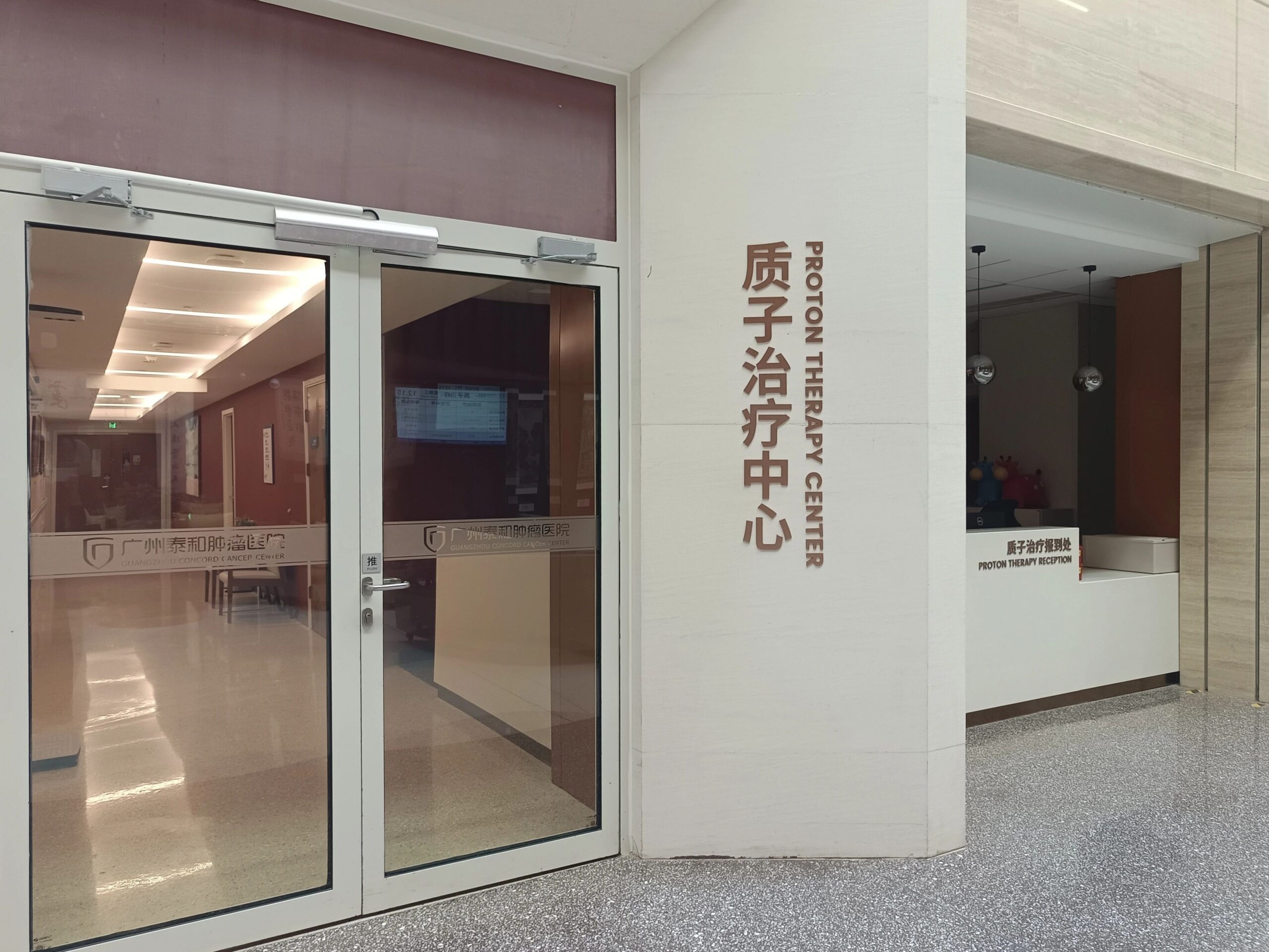
As the first proton therapy center in South China to enter clinical operation, the Proton Therapy Center at Guangzhou Taihe Cancer Hospital strictly adheres to the radiotherapy guidelines and standard protocols of MD Anderson Cancer Center, dedicated to providing patients with personalized, cutting-edge treatment plans. The center is equipped with the world-leading Varian ProBeam® proton therapy system and led by authoritative domestic experts; the team possesses extensive experience, having managed thousands of clinical cases in the field of proton therapy.
After completing 28 sessions of proton therapy, Mr. C continued his chemotherapy at Guangzhou Taihe Cancer Hospital. Follow-up imaging three months later showed no signs of activity in his prostate lesion. Meanwhile, endoscopic examination revealed no obvious mass at the rectosigmoid junction, though surgery was still required for definitive confirmation.
Following a comprehensive re-evaluation by the multidisciplinary team, it was determined that Mr. C met the criteria for surgery. A surgical team led by Associate Chief Physician Xie Xiaoming performed a “laparoscopic-assisted radical resection of rectosigmoid junction cancer.” The procedure went smoothly with intraoperative blood loss of less than 10 ml, and the patient recovered well postoperatively. Even more encouragingly, postoperative pathology confirmed that the patient had achieved a pathological complete response (pCR).
Associate Chief Physician Xie Xiaoming further explained: “pCR is tantamount to a clinical cure and represents the ideal goal of neoadjuvant or conversion therapy. It indicates a very low risk of tumor recurrence and a favorable long-term prognosis. This also suggests that this comprehensive treatment model—centered on proton therapy—holds broad clinical prospects for similar cases.”
Today, Mr. C is recovering well and gradually returning to his normal life. This case powerfully demonstrates that when facing the complex scenario of double primary cancers—prostate cancer and rectosigmoid junction cancer—located in close proximity within the pelvic cavity, a personalized, integrated treatment plan formulated by a multidisciplinary team, combined with advanced technologies like proton therapy, can effectively control or cure both cancers, thereby delivering genuine survival benefits and ensuring a good quality of life for the patient.