A normal resting heart rate for an adult ranges from 60 to 100 beats per minute; rates that are too fast or too slow are considered abnormal and can compromise heart health. When the heart rate drops below 50 beats per minute, individuals are highly susceptible to symptoms such as dizziness, fatigue, and shortness of breath. Sudden, unexplained fainting may occur, and in severe cases, the condition can trigger cardiac arrest or lead to sudden death, posing a critical risk.
Mr. Xu (pseudonym), an octogenarian, had long suffered from bradycardia (abnormally slow heart rate). At its lowest, his heart rate was merely 32 beats per minute—far below the normal range and effectively half the speed of a healthy heart. Seeking a solution to his cardiac issues, Mr. Xu visited Shulan (Hangzhou) Hospital. After careful research and comparison, he opted for the implantation of a minimally invasive, convenient leadless pacemaker—a “capsule” device—to restore vigorous function to his aging heart.
Sudden Discomfort Reveals Serious Heart Condition
More than a month prior to his admission, Mr. Xu had begun experiencing significant physical distress, including frequent dizziness and nausea; he even nearly fainted, and his overall physical condition deteriorated rapidly. Upon noticing these alarming symptoms, his family immediately took him to Shulan (Hangzhou) Hospital for an examination.
Detailed tests, including an electrocardiogram (ECG), confirmed that Mr. Xu was suffering from an old inferior wall myocardial infarction, sinus bradycardia, and third-degree atrioventricular block. These findings indicated a severe heart rhythm disorder and significant impairment of cardiac conduction. He faced an imminent, life-threatening risk of cardiac arrest, necessitating urgent hospitalization and intervention; permanent pacemaker implantation was identified as the most effective treatment.
After researching the condition, the family confirmed that pacemaker implantation was the standard, appropriate treatment. However, given Mr. Xu’s advanced age and underlying conditions—such as hypertension and coronary heart disease—his physical tolerance was limited, and the family was deeply concerned about the risks associated with traditional pacemaker surgery. Traditional Pacemakers vs. Capsule Pacemakers: A Clear Comparison of Pros and Cons
【Traditional Pacemakers】
Traditional pacemakers are roughly the size of a matchbox. Implantation requires a skin incision to create a subcutaneous pocket for the device body; leads (wires) are then connected to the device and implanted into the right atrium, right ventricle, or left ventricle to provide pacing.
For elderly patients with low immunity or underlying medical conditions, this procedure involves a large incision and external leads. Post-operative complications—such as pocket infections, lead abrasion, or lead dislodgement—are common, and the recovery period is long, posing various risks.
【Leadless Capsule Pacemakers】
Compared to traditional devices, this new pacemaker represents a “breakthrough technology” in cardiac intervention with significant advantages: it is the size of a small capsule and weighs less than 2 grams. It requires no leads, no skin incisions, and no subcutaneous pockets, thereby eliminating the root causes of post-operative infections and lead-related complications.
The procedure does not require general anesthesia. Doctors create a minimally invasive access point via the femoral vein to precisely implant the miniature capsule pacemaker into the trabeculae of the right ventricle. It utilizes the body’s own local electrical pathways to provide stable pacing, resulting in minimal trauma and high procedural efficiency.
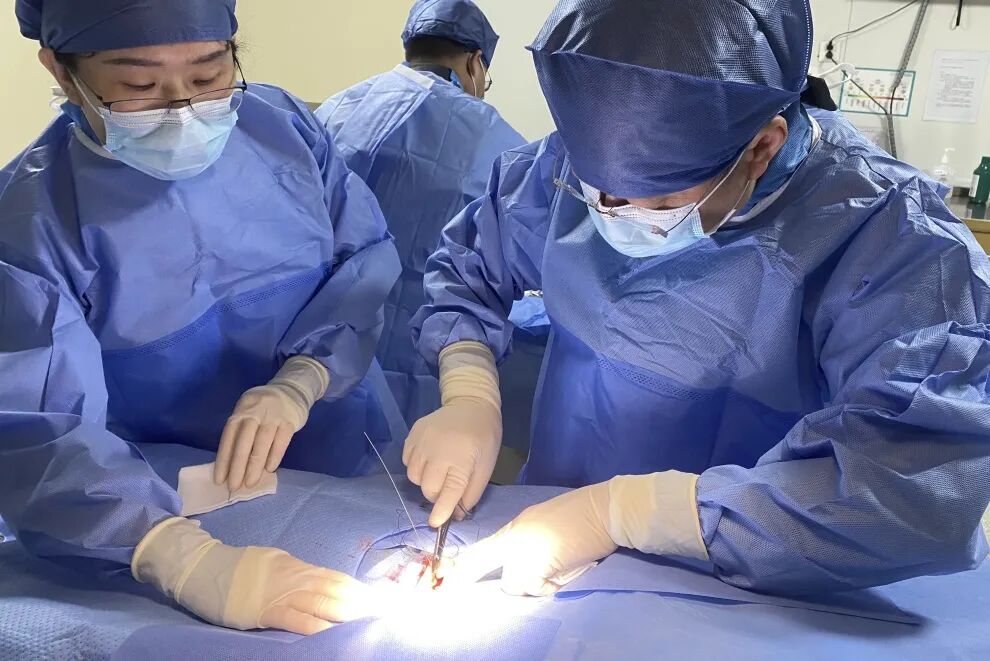
Mr. Xu’s family stated that after comparing the pros and cons, they decisively chose the capsule pacemaker for him. The surgery went smoothly, and he was discharged after just two days of recovery. The family expressed their pleasant surprise that a once-dangerous heart condition could now be resolved easily and safely thanks to advanced medical technology.
Smart Adaptation: Maximizing the Advantages of the Miniature Pacemaker
According to medical staff, the leadless capsule pacemaker is not only minimally invasive and safe but also features powerful smart capabilities, allowing it to precisely adapt to the patient’s heart rhythm. The device autonomously senses the patient’s intrinsic heart rate in real time: when the heart rate exceeds the programmed minimum pacing rate, the device automatically enters a standby sensing mode without delivering active pacing pulses, thereby aligning with the heart’s natural rhythm; conversely, when the heart rate drops below the safety threshold, the device immediately initiates pacing to drive a regular heartbeat, ensuring the heart rate remains within safe limits and maintaining stable cardiac blood flow.
Furthermore, the pacemaker features an MRI-compatible mode, offering exceptional versatility. Should a patient require an MRI scan in the future, this mode can be activated directly without the need to remove the device; this effectively resolves the long-standing issue where patients with traditional pacemakers were unable to undergo MRI examinations, greatly enhancing convenience for future medical care and health check-ups.