
Severe hand injuries can change a person’s life within seconds. In many accidents, surgeons must restore blood flow quickly. Without circulation, the injured tissue may not survive.
However, doctors cannot always reattach a hand immediately. Some patients suffer severe crushing injuries around the arm or wrist. In these cases, the original injury site may not support safe replantation.
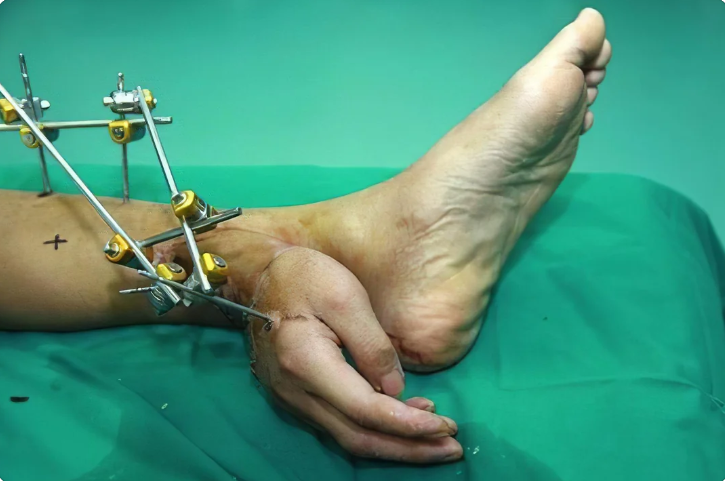
This is where temporary ectopic hand implantation becomes important. Surgeons temporarily attach the severed hand to another part of the body. The temporary site gives the hand a blood supply while the injured arm heals.
In China, several reported cases have shown how advanced microsurgery can help save limbs after complex trauma.
What Is Temporary Ectopic Hand Implantation?
Temporary ectopic hand implantation is a staged limb salvage technique. Surgeons use it in selected severe trauma cases.
The word “ectopic” means “in an unusual place.” In this procedure, surgeons place the amputated hand on another part of the patient’s body. They may choose the ankle, calf, abdomen, or another suitable area.
The goal is not permanent relocation. Instead, the temporary site keeps the hand alive. It provides blood flow until doctors can repair the original injury site.
After the arm becomes stable, surgeons move the hand back to its proper position. Then they reconnect bones, blood vessels, nerves, tendons, and soft tissue.
Why Immediate Hand Replantation May Not Work
Standard hand replantation requires a healthy injury site. Surgeons need usable blood vessels, soft tissue, and bone structure.
Industrial accidents often cause complex injuries. A machine may crush, tear, or contaminate the arm. The hand may still remain viable, but the arm may need more time to recover.
If surgeons reattach the hand too early, the operation may fail. Poor blood flow, infection, and tissue swelling can all increase risk.
Temporary ectopic implantation gives surgeons another option. It allows them to protect the hand first. Then they can prepare the arm for final reconstruction.
The Xiangya Hospital Case in 2013
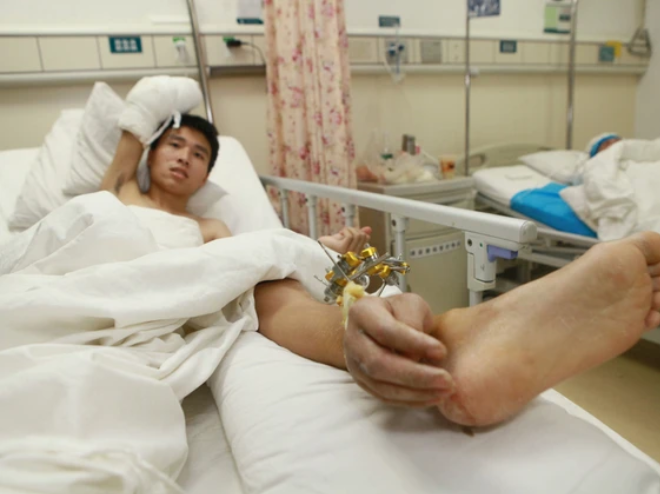
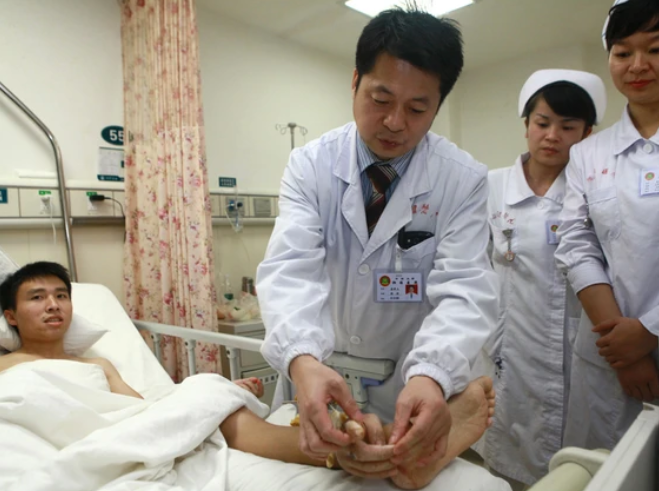
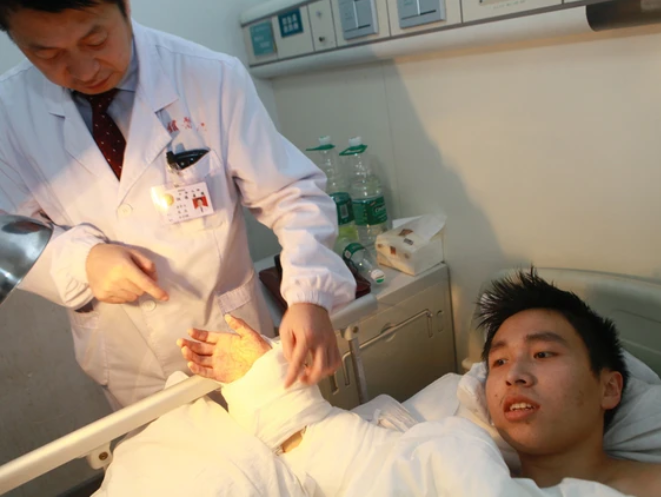
One widely reported case took place at Xiangya Hospital in Changsha, Hunan Province. A young factory worker lost his right hand in a machinery accident.
His arm suffered severe damage. Because of this, doctors could not reattach the hand immediately. The surgical team needed a different plan.
Surgeons temporarily connected the hand to blood vessels near the lower limb. This step helped maintain circulation. It also gave the injured arm time to recover.
About one month later, the team performed another operation. They moved the hand back to the arm and completed the replantation.
The case gained global attention because the image looked unusual. Yet the medical logic was clear. The team saved the hand first, treated the damaged arm, and then completed reconstruction.
How the Procedure Works
This technique requires careful planning. Surgeons must first evaluate the amputated part. They need to confirm that the hand can still survive.
Next, they choose a temporary recipient site. The site must have strong and reliable blood vessels. It must also allow safe microsurgical connection.
During surgery, the team connects tiny arteries and veins under magnification. This step restores blood flow to the hand. Good circulation helps keep the tissue alive.
At the same time, doctors treat the original injury site. They remove damaged tissue, control contamination, and reduce swelling. They also prepare the area for later replantation.
When the arm becomes ready, surgeons perform the final operation. They detach the hand from the temporary site. Then they reattach it to the original limb.
China’s Expertise in Microsurgery
China has developed strong experience in hand surgery and microsurgical reconstruction. Large hospitals often treat complex trauma cases from industrial and traffic accidents.
These cases require more than emergency surgery. They also need staged planning, vascular repair, infection control, and long-term rehabilitation.
Xiangya Hospital’s microsurgery team has attracted attention for complex limb salvage work. Its reported cases show how Chinese surgeons use advanced techniques to solve difficult trauma problems.
For international patients, this matters. Complex limb injuries need hospitals with strong emergency care, microsurgery teams, and rehabilitation support.
Who May Benefit From This Technique?
Temporary ectopic hand implantation is not suitable for every patient. Doctors consider it only in special cases.
The amputated hand must still have salvage potential. The temporary site must provide enough blood supply. The patient also needs careful monitoring after surgery.
In some cases, the injury may be too severe. Infection, long ischemia time, or serious tissue damage may limit the chance of success.
Even after successful surgery, recovery takes time. Patients usually need rehabilitation to regain strength, movement, and sensation. Nerve recovery may take months.
Why This Technique Matters
Temporary ectopic implantation shows the value of staged reconstruction. Surgeons do not always need to choose between immediate replantation and amputation.
Instead, they can create a temporary solution. This solution protects the limb while the body heals.
For patients, limb salvage can change long-term quality of life. A saved hand may help a person regain independence, return to work, and reduce disability.
For medical institutions, these cases also show the importance of advanced trauma systems. Successful limb salvage requires fast transfer, expert evaluation, and coordinated surgical care.
Conclusion
Temporary ectopic hand implantation is one of the most remarkable techniques in modern microsurgery. It allows surgeons to keep a severed hand alive when immediate replantation is too risky.
Reported cases from China show how experienced microsurgical teams can handle complex limb trauma. These cases also highlight China’s growing role in advanced hand surgery, reconstructive microsurgery, and limb salvage treatment.
For patients with severe hand injuries, timing matters. Early emergency care and transfer to a qualified microsurgery center can make a major difference.